
Many people assume that getting weaker is simply an unavoidable part of getting older. They expect that at some point they will struggle to get out of a chair, lift shopping bags or climb stairs without effort. But increasingly, research suggests something quite surprising: much of the muscle loss and weakness we associate with ageing may actually come from inactivity rather than age itself.
In fact, if people remain active and continue strength training, there is often very little reason to lose significant muscle mass or strength until well into later life, around the age of 70 and beyond.
This challenges how many of us think about ageing.
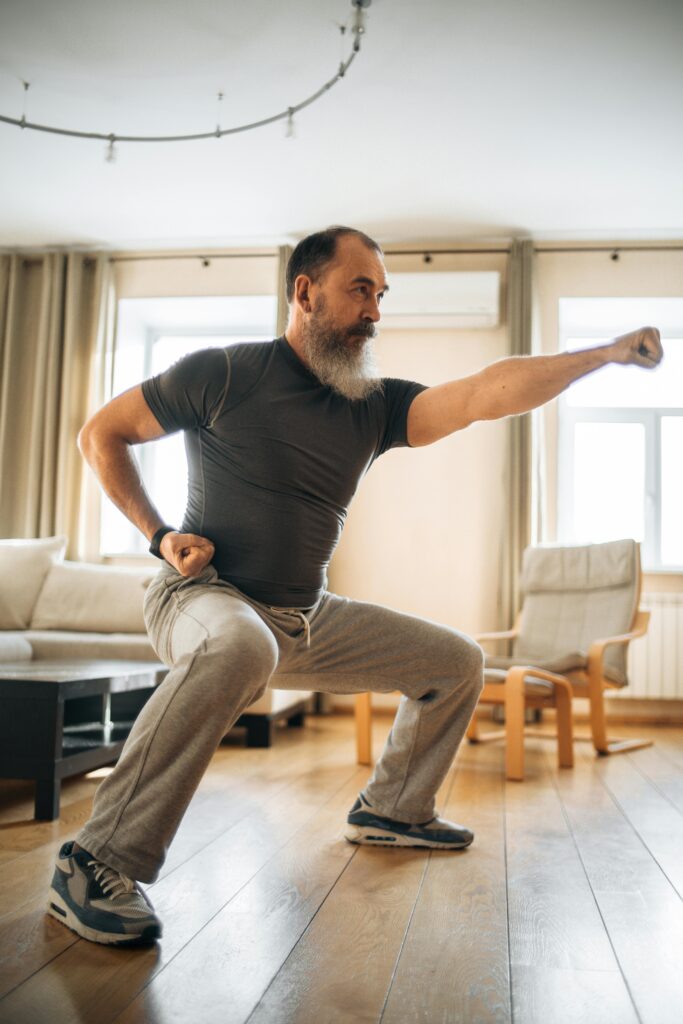
From our 30s onwards, we are often told that muscle loss is inevitable. While there is some truth to this biologically, the decline is usually accelerated massively by lifestyle. Modern life encourages sitting, convenience and comfort. We move less, lift less and gradually stop challenging our muscles. The body responds accordingly: if strength is no longer needed, the body slowly gets rid of it.
The phrase “use it or lose it” turns out to be remarkably accurate.
This process is known as sarcopenia, the age-related loss of muscle mass and strength. But studies repeatedly show that strength training can slow it dramatically and, in many cases, reverse much of it. Even people in their 70s, 80s and 90s can build meaningful amounts of muscle and strength when they start resistance training.
One of the reasons strength matters so much is because muscle is not just about lifting heavy objects. Strong muscles protect joints, improve balance, support bone health and help regulate blood sugar. Muscle is closely linked to independence. Once people become weak and frail, everyday life becomes harder very quickly.
The encouraging part is that preventing this does not require becoming a bodybuilder. Two or three strength sessions a week can make a significant difference. Exercises such as squats, lunges, pushing, pulling and carrying all help maintain functional strength. The key is progressive overload: gradually asking your muscles to do a little more each time.
Protein intake also matters, particularly as we age. Muscles need both stimulus and building material. Combined with good sleep and regular movement, strength training becomes one of the most powerful tools we have for healthy ageing.
Of course, ageing still exists. None of us are becoming superhuman at 85. But there is a huge difference between natural ageing and accelerated decline caused by inactivity.
Getting older is inevitable. Being strong is within your control.