
We tend to think of losing strength as something that happens gradually as we get older. And whilst this is true, there is something else to consider.
Imagine a graph showing how your strength changes throughout your life. The line might gradually slope downwards as you age. But life doesn’t always follow a smooth line. Sometimes your strength can take a sudden drop.
This can happen when you become ill, have an operation or spend time in hospital. You might be in bed for several days, moving very little and barely using your muscles. Your body will react quite quickly and you can lose muscle and strength surprisingly rapidly when you stop using them.
A recent study looked at ten healthy men with an average age of 68 who spent ten days on strict bed rest. Their thigh muscle volume fell by around 6% and their leg strength by 13%. Ten days was enough to make a significant difference.
Of course, being in hospital isn’t quite the same as taking part in a controlled study, and the amount of strength you lose will depend on your circumstances. But it shows just how quickly inactivity can affect us.
So what does this mean for you?
Imagine two people who are the same age. One has spent years building and maintaining their strength, while the other has gradually become weaker. Both then have an illness that leaves them inactive for a week.
They will both lose strength, but the person who started stronger has a bigger buffer. They might still be able to get out of a chair, climb the stairs and manage everyday tasks independently. The other person may find those same tasks much harder or even impossible.
This is why I believe strength training is about much more than looking good; it is about giving yourself some reserve for the unexpected.
Being stronger doesn’t guarantee that you’ll avoid illness or a hospital stay. But maintaining your fitness and strength can help you stay more capable and independent, and may reduce your risk of some of the problems that come with ageing.
You can’t always control what happens to you, but you can prepare yourself as much as you can for when something does.
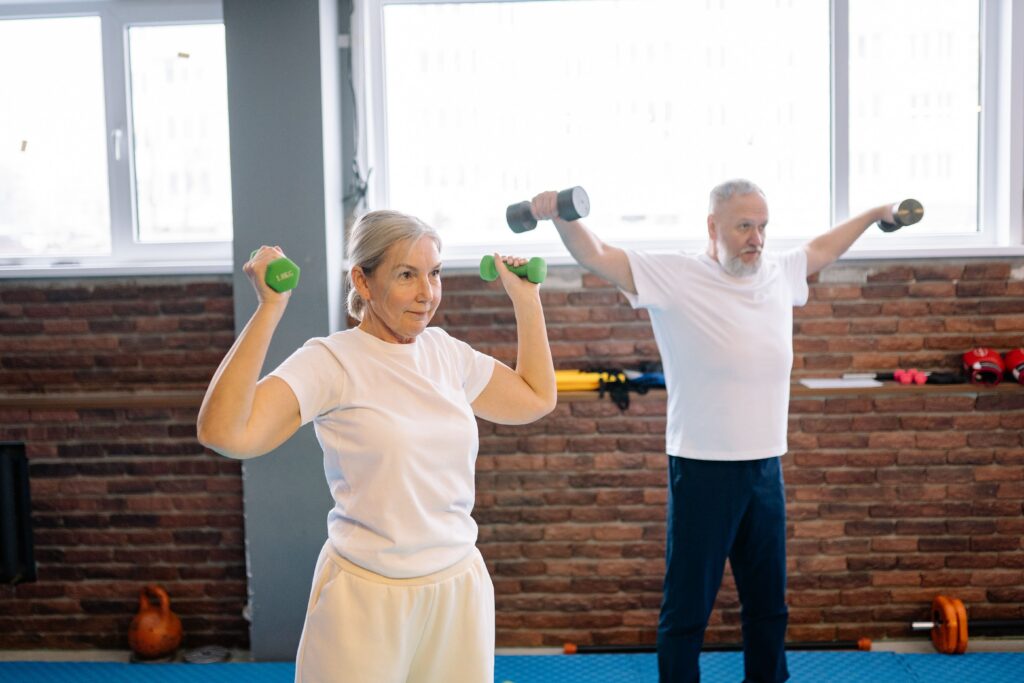
So, if you aren’t already doing some strength training, start now. As I’ve mentioned before, you don’t need a gym membership or an elaborate programme. Sit-to-stands from a chair, press-ups against a wall and some simple resistance exercises are a good starting point.
Think of it as building a buffer for the future. You might not need it for years, but when life suddenly knocks you backwards, you’ll be glad you have it.
Leave a Reply