
When most people think of strength training, they picture lifting weights up and down or doing endless repetitions. But there’s another form of training that’s simple, effective, and often overlooked: isometric strength training. It’s one of the most accessible ways to build strength, and you can do it almost anywhere with no equipment at all.
Isometric training involves contracting a muscle without changing its length. In simple terms, you create tension but don’t move. If you’ve ever held a plank, paused at the bottom of a squat, or braced yourself to lift something heavy, you’ve done isometric training already.
One of the biggest benefits of isometric training is how joint-friendly it is. Because there’s little to no movement, it places less stress on joints while still challenging the muscles. Research shows isometric training can also help lower blood pressure when performed regularly.
Isometric training is also great for people returning from injury or those who find dynamic exercise uncomfortable. They are particularly useful for early rehab for tendon injuries.
The best part is how easy it is to get started at home. Here are a few simple examples:
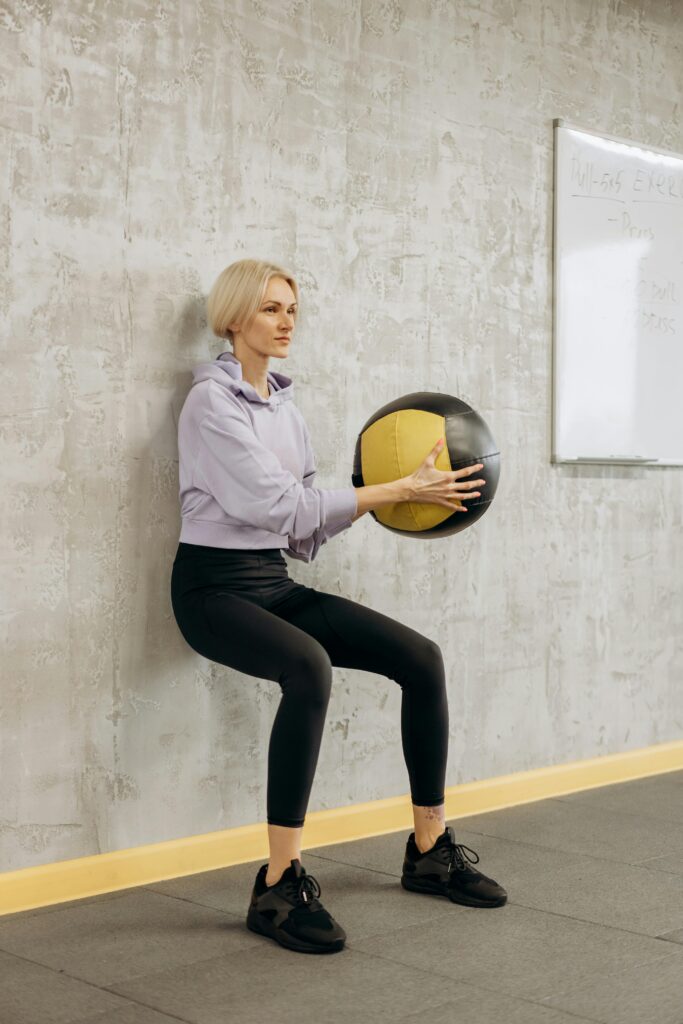
Wall sit: Stand with your back against a wall, slide down until your thighs are roughly parallel to the floor, and hold. This works your quadriceps, your thigh muscles. See how long you can hold it for and then try to do a little bit more next time.
Plank: Support yourself on your forearms and toes, keeping your body in a straight line. This strengthens your core muscle, shoulders and glutes (your bottom).
Glute bridge hold: Lie on your back with knees pulled up towards your bottom, lift your hips and hold. This targets your glutes and lower back.
Push-up hold: Hold the bottom or mid-point of a push-up, either on your toes or knees. This is a more taxing exercise.
Isometric exercises don’t need to be held for long. Even 20–40 seconds can be effective, repeated a few times. They’re great if you don’t want to invest in any weights and don’t need to take up much time.
The next time you’ve put the kettle on, try one or two of these exercises. See if you can make it a daily routine for yourself.