
Can you still train when the temperature gets hot? Heatwaves are becoming more common in the UK so it is something we need to learn how to deal with.
Safety always has to come first. If you are in any doubt, don’t train, the risks are not worth it. Don’t risk your health just to get that run on Strava. Make yourself aware of the signs of heat stroke and heat exhaustion – this could save your life or someone else’s.
Apart from the danger of your core body temperature rising, training in hot weather places additional stress on your cardiovascular system. Your heart has to work significantly harder by pumping more blood to your skin to radiate heat away. As you dehydrate, your blood plasma volume drops, making your blood thicker and harder to pump. Because your muscles still demand oxygen, your heart rate will be higher than usual, sometimes much higher.
You might have heard of cardiac drift. This is the phenomenon where your heart rate gradually increases during a training session, despite the physical effort staying constant. The hotter you get, the worse this effect becomes.
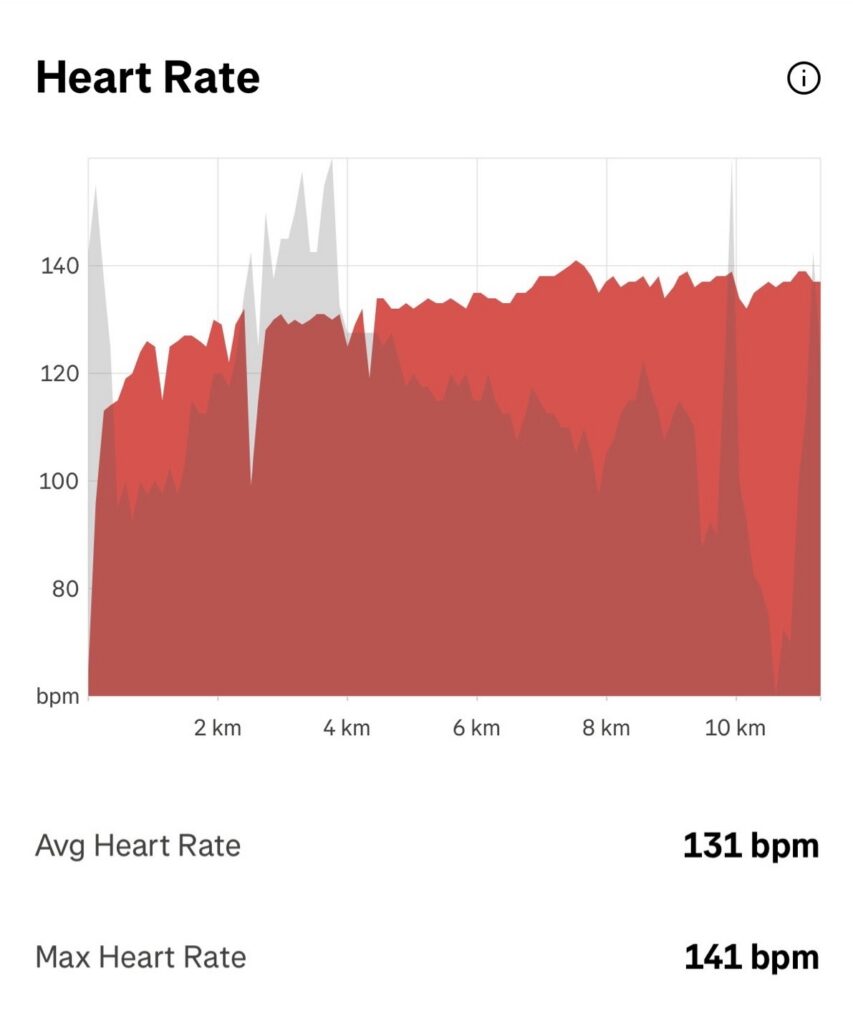
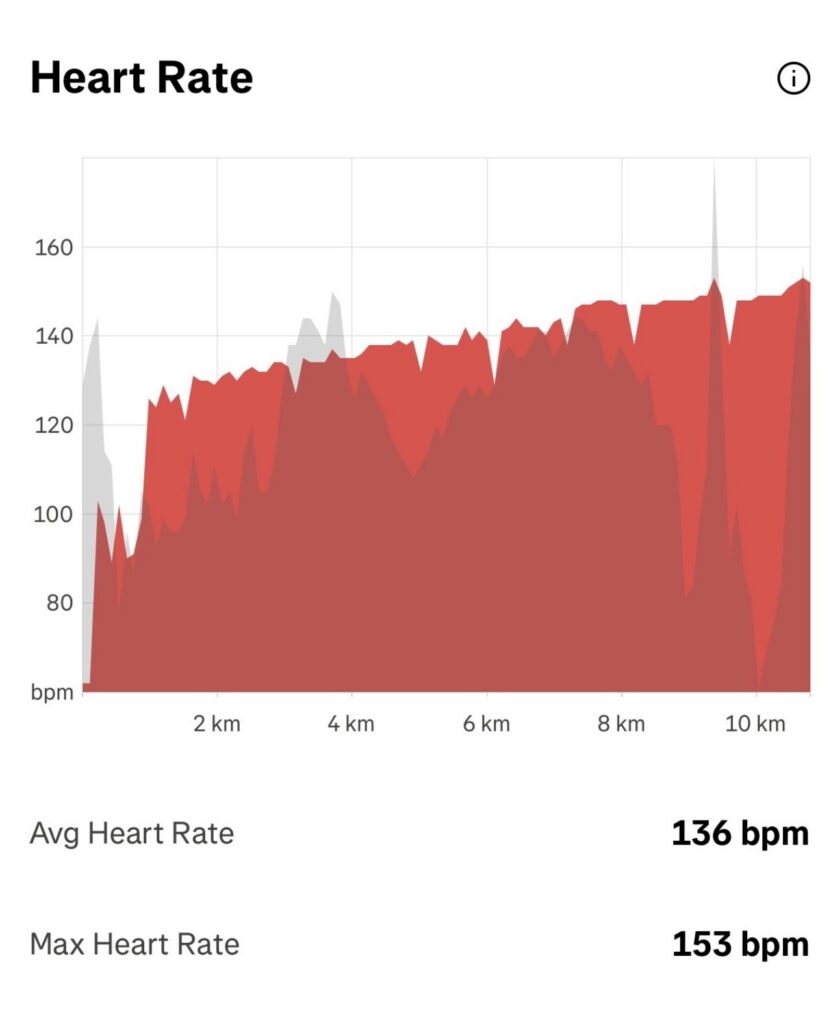
Below are two graphs of my heart rate for two steady runs on the same course and same pace, the first is from when the temperature was in the low 20s°C; the second was when it was over 30°C. For the first run the heart rate settled in the high 130’s after half way. In the 30C run the heart rate was rising throughout the run as I got hotter.
Because of cardiac drift, you cannot use heart rate as a guide for effort in the heat. Instead use your Rate of Perceived Exertion (RPE) – how hard your session feels on a scale of 1-10. If your steady Zone 2 session usually feels like a 3 or 4 out of 10 then keep it at that same level in the heat. You will probably find that your pace is slower than usual, it might get slower as the session progresses, but that’s fine.
As your body is under more stress due to the heat then avoid higher intensity workouts like intervals or tempo sessions. It can be dangerous to push yourself hard in the heat. I’d recommend easier Zone 1 or Zone 2 sessions, and reduce the length of these too according to the heat.
Other things to consider:
- Keep hydrated: Drink before and during the session, carry water.
- Adjust your timing: Choose the coolest parts of the day.
- Protect your skin: Apply sunscreen and wear a hat (essential if your hair is thinning).
- Use active cooling: Try wearing an ice bandana around your neck.
- Alter your route: Choose shadier, flatter routes.
- Adjust expectations: Accept that you will be slower.
- Have a buddy: Run with a partner if possible.
- Listen to your body: Stop immediately if you feel dizzy, nauseous, or unwell.
If it is too hot to train outside then use it as a perfect opportunity to do some strength training instead; many athletes are gym-shy, despite the benefits it can bring.
Despite all the warnings above, there are benefits to training in the heat. The more you do it, the better adapted you will be to train or race in the heat. This is especially useful if you have a hot race coming up. You will also learn what works for you in the heat.
In summary, it can be safe to train in the heat but be careful and always put your safety first.