
Have you got a heart rate monitor but not really sure how you are supposed to relate that to your training? Are the zones that your Garmin or Strava have estimated for you correct? Why is your heart rate so different today when it is hot than yesterday?
Heart rate monitors are great, and I use mine a lot, but they can mislead you about your actual training zone.
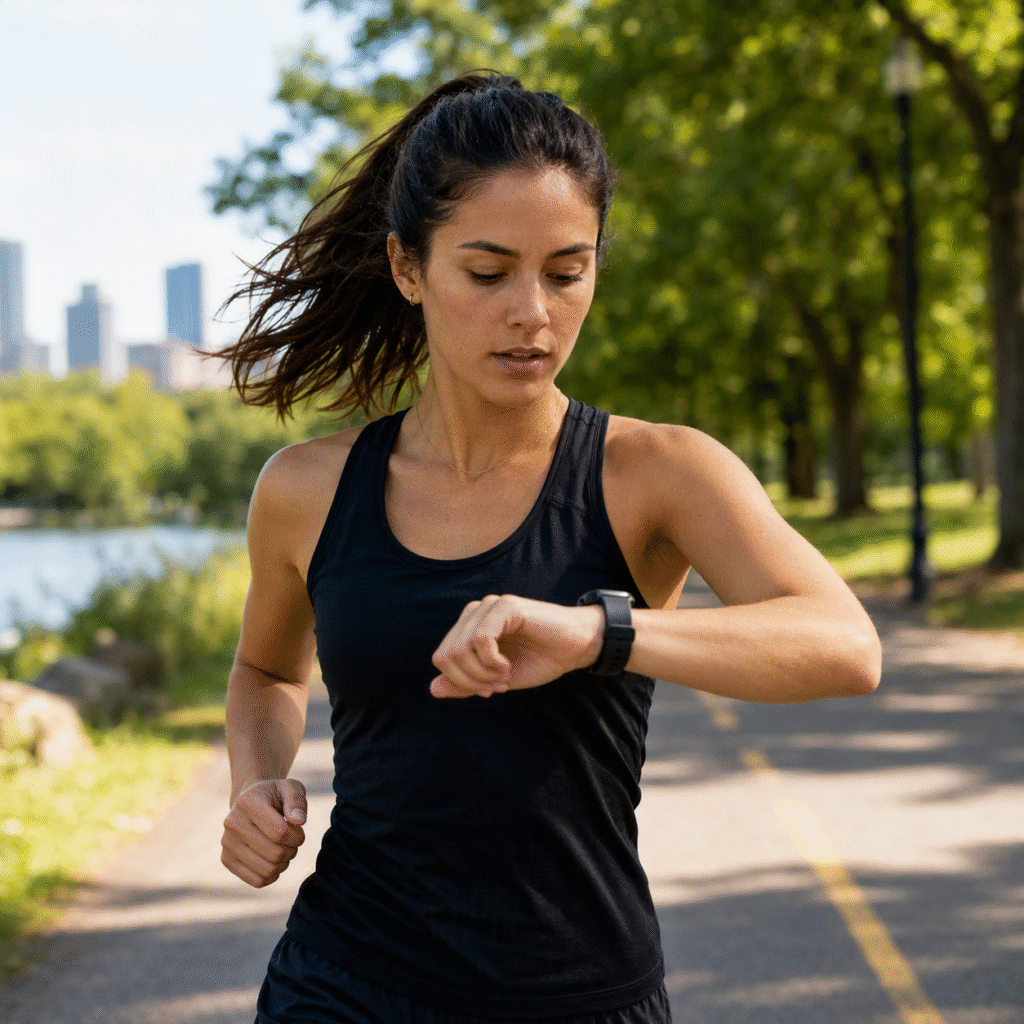
A skill to learn is how to use Rate of Perceived Exertion, RPE. It was introduced over 60 years ago by the Swede Gunnar Borg but is just as relevant today.
The original scale went from 6 to 20, however now most people use the 1 to 10 version. And it is exactly as it sounds, on a scale of 1 to 10, how hard is your effort. 1 is a slow walk, up to 10 for an all our sprint.
Here are my 4 reasons when I think you should use RPE:
- Heart Rate Lag: During short, hard intervals, your heart rate can take up to a minute to catch up to your actual effort. By the time this has happened, your interval might already be over!
- Heat: In previous posts I explained how the heat can affect your heart rate. Heat and/or dehydration could easily elevate your heart rate by 10 bpm. This could make you think you are into a higher training zone than you actually are.
- Incorrect Zones: The training zones that you have might not actually be correct, most of the time these are estimated using generic formulae.
- No Heart Rate Monitor: You might not have a heart rate monitor at all! Or the battery has died.
There are many variation of the 1 – 10 scale but here is what I like to use for running, there is a similar one for cyclists) using a 5 zone model:
| Zone | RPE | Exertion Level | Talking Ability |
| 1: Recovery | 1–2 | Walk or very easy jog | No problem at all |
| 2: Endurance | 2–3 | Comfortable, steady run | Easy, flowing conversation |
| 3: Tempo | 4–6 | Marathon to half-marathon pace | Progressively harder to talk |
| 4: Threshold | 7 | Hard run (10k pace) | A few words at a time |
| 5: VO2 Max | 8–10 | All-out effort, short sprints | Single words (usually rude) |
Using RPE can make getting your training right incredibly simple. If I ask one of my athletes to do a tempo run, they don’t need to be looking at their watch, they lock into that 4–6 RPE range.
Where I find RPE most useful is for Zone 2 endurance runs. Realising that an endurance run should only feel like a 2 or 3 out of 10 keeps you from running too fast. Doing these easy runs too fast is one of the biggest mistakes people make.
Learning what these RPE’s actually mean when you are out on a run will take a bit of time, but once you do then it is a powerful skill you will have learnt!